Optimizing the Auto Claims Experience with Tanner Sheehan of LexisNexis Risk Solutions
About This Episode
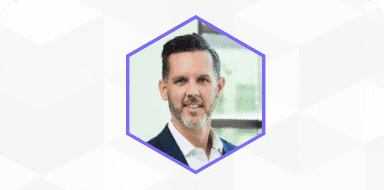
On this episode of Conversations on the Creek, Rob Savitsky and Mathew Stordy chat with Tanner Sheehan of LexisNexis Risk Solutions about optimizing the auto claims customer experience.
Read more
We kick off the show by asking Tanner about some of the key takeaways from his whitepaper on U.S. auto claims trends, which provides insights into consumers’ perception of the claims experience and the reasons why some consumers opt to switch or consider switching auto insurers while others do not.
From there, we had a lively discussion around some of the emerging data sources that are helping propel insurers to reduce time to close claims, and the varying levels of sophistication for how insurers are adopting 3rd party data to improve customer experience.
We then dive into chatting about connected cars and future opportunities for insurers to leverage crash detection data and other telematics when an accident happens.
Finally, we close out the show with Tanner providing his future vision for how he sees auto insurers using data and analytics in their core claims systems.
NYou can find Tanner’s auto claims trends white paper by visiting https://propertycasualty360.tradepub.com/free/w_lexi83/.
To learn about our ten integrations with LexisNexis Risk Solutions, go to https://www.duckcreek.com/content-exchange/ and use the filter for “LexisNexis”.
Be sure to check out all our other episodes and follow us on Apple Podcasts, Spotify, and visit duckcreek.com/podcasts.
Transcript
00:12 Rob Savitsky:
Welcome back to another episode of Conversations on the Creek, the podcast from Duck Creek where we interview thought leaders about how the latest InsurTech is transforming the P&C insurance industry, whether you work in underwriting, sales and marketing. claims or an insurance IT department, in each episode, we uncover the insights you need to reimagine the future of insurance. I’m Rob Savitsky.
00:33 Matthew Stordy:
I’m Matthew Stordy
Read more
00:35 Rob:
And in today’s episode, we’re so thrilled to be joined by Tanner Sheehan, VP and General Manager, Claims Solutions at LexisNexis Risk Solutions, who’ll share his perspective on customer experience trends during auto claims, and how insurers can better leverage both new and emerging data sources to drive better outcomes.
If you haven’t heard of LexisNexis Risk Solutions yet, you definitely should have because they’ve been on the show before. But in any event, LexisNexis Risk Solutions harnesses the power of data and advanced analytics to provide insights that help insurers reduce risk and improve decisions to benefit people around the globe. Tanner, so glad we’re able to get together today. Welcome to the show. How are you?
01:14 Tanner Sheehan:
I’m great. Thank you, Matthew, good to see you.
01:18 Matthew:
Oh, it’s great to see Tanner.
01:19 Tanner:
We’ve been looking forward to this.
01:22 Tanner:
Sure, yeah. Fascinating, and coming back to the point you made of— in 2022 New Mexico being the state with the most acres burned in wildfires in the US. That is a surprising one for me. I just assume it’s California probably just about every year. So, really interesting.Yeah, me too. Like I said, a special episode for a couple of reasons. One, you are– actually, maybe not you Tanner, but LexisNexis, the first repeat guest to be on Conversations on the Creek. So that’s awesome. You know, listeners should definitely go back check out the episode we did last year with George Hosfield on home insurance trends. And secondly, it’s a bit of a reunion between you and Matthew here today.
01:48 Tanner:
That’s right. Matthew, and I go back, I don’t know, probably 10 years, work together for probably five.
01:52 Matthew:
10 years? Yup, yup, where we met at a Duck Creek conference of all places.
01:58 Rob:
Back when you were at Lexis.
02:00 Matthew:
Yup. So, I’ll kick it off. So Tanner, you know, I’m a big fan of the LexisNexis insurance demand meter report and your trends report. What are some of the key takeaways from your recent claims trends study? And what does it tell us about the customer experience?
02:18 Tanner:
Yeah, well, by the way, the auto trends report you referenced, that’s coming out, like, right now. So, look for that, and that’s going to cover- that will cover auto trends and claims trends from 2022. What you’re asking about, though, is a study that we conducted specifically for claims last year. And we wanted to really understand how the claims customer experience impacted policyholder retention – and specifically switching– So, how it impacted a person’s decision to leave one carrier and go to another.
We looked at it in two ways, really. So, the first thing we did is, we looked at all the industry data we have and conducted, really, a retro analysis. And what we did is we looked at millions and millions of policies that had experienced a claim. We lined those up next to millions and millions of policies that hadn’t, but made a like-for-like comparison; Same 10 years, same household composition, same credit-based insurance scores, so that we had we had kind of a level playing field there.
And then we looked at that– the policyholder stickiness after a claim, and we compared it to the same type of policyholder that didn’t experience a claim. What we found there is policies that have a claim are 35% more likely to switch carriers in the 180-day period following a claim than the very similar types of policies that didn’t experience a claim. So, interesting stat. But the problem with that is it’s really just a stat, not much you could do with it.
So, we actually went out and conducted a consumer survey. And, that was really to say, alright, we know what happens to policies statistically. Now, what were the thoughts and feelings of people who had claims and what caused them to do what they did?
And so, we interviewed about 1400 consumers, all carrying full-coverage policies, they were all first-parties, and they all had a claim in the 12 months before. And we asked them tons of questions about their service experience. But the chief question was, did the claim experience you had cause you to switch carriers or consider switching carriers? And 33% of those consumers said yes.
And we can go into the reasons for that. But that study has been very popular with carriers. We’re issuing a white paper on it here in the next couple of weeks. So, happy to talk about that further if you want to.
04:57 Matthew:
Well, and Tanner, I mean, I saw the study and one of the interesting things about the survey I thought was about self-service, and how you’re seeing in the market, like this trend where carriers are trying to embrace better self-service. But I think one of the things that your survey showed was, it was actually a correlation where people were more likely to switch if they actually went through a self-service experience. And so, I’m looking at that as well. Is this really an opportunity maybe for the industry to say, maybe we need to improve the way we’re doing self-service?
05:35 Tanner:
Yeah, yeah. And clearly, one of the insights from the survey that made you made you pause, right? The switchers- Are the people more likely to switch, were more likely to prefer self-service, and therefore also, more likely to rely on it, right. And so, we asked a question that said, hey, in your claim, did you rely more on the adjuster? Or more on self-service? Or did you rely about equally on both? And what we call the flight risks, which are really the people that either switched or went out and got quotes, but didn’t end up switching, those people were 74% more likely to rely more on self-service than on the adjuster. So definitely– definitely opportunities for improvement. I think all carriers know that. And it may not have been, it’s not always the self-service itself that’s the hard part. It’s how to blend the self-service with the adjuster assistance. That can be tricky.
06:47 Rob:
Yeah, I guess I’m wondering, did you delve a little bit more into the self-service aspect? It definitely makes me think of one thing that Matthew and I chatted with Brian Falchuk on a prior episode of Conversations on the Creek. And, you know, it was that- just because you put self-service in place as a carrier, not necessarily means that you’ve set up the best self-service experience.
And you know, the example he gave was, yeah, you want to let people talk to you, but is forcing them to go through your mobile app the best means possible when you could just take this just-text-them approach, or, you know, just put it on your website and reduce the friction that’s there. Were there any incidents like that that came in around self-service? Or were there some other– Or was maybe that’s something for follow up?
07:31 Tanner:
Well, I think, yeah. You can’t lock people into a self-service channel. Right, you’ve got to allow the allow some flex there. That was definitely one insight, I think what was most interesting is- those flight risks, they heavily, heavily, preferred self-service on what you might call the easier parts of the claim. So, I want to check my status updates on the app or online. I want to get my payment digitally. I can submit photos and documents online, cool.
They actually far preferred help from a human though, relative to the loyalists, relative to the people that never considered switching as a result of their claim. They much preferred help from a human when they got their estimate back from the body shop, like, what does this mean? What do I do next?
And so– and also, during the FNOL process, they wanted more help from a human. So, you ask them one question, do you prefer self-services or human? They’ll say I prefer self-service, really, but you can’t stop there because the answer is it actually depends, right?
Once I got into the claim, I actually realized that maybe self-service wasn’t right, for this particular thing, for this particular milestone in the claim. So really being omnichannel, allowing customers to jump between self-service and adjuster assistance and even helping or watching the process and encouraging customers to jump out of a self-service channel. When you see things aren’t going well, that’s probably an evolution too, you know. You think of where we’ve gotten to in quoting.
You go to some of the major the major carriers that will write direct, you know, you go to their site and begin a quote. They will encourage you onto the phone, if they don’t think that quoting session is going really well, right? There may be more opportunity for that during the claims process as well.
09:48 Rob:
The first touchpoint to be with a human and then, they know that it’s in, they know it’s being processed, and they’re good with kind of doing those more– I don’t know if they’re mundane tasks, but kind of less high-consequence tasks, where they have an idea that the outcome is moving in the right direction and they will reach out if they need that.
10:08 Tanner:
Yeah, yeah. And when you talk to claims leaders, it’s kind of universally known that you’ve got to set expectations. Everything goes better when you set expectations. And I’m not saying that you can’t do that really well, digitally, or really, you know, a really slick way through an app or an online process. But it does seem like the humans right now might be doing a better job of setting up what to expect, explaining how things are likely to go over the next week or so than the digital processes. That may be a major, major portion of it.
10:45 Rob:
Sure, sure. Makes sense. So, changing gears slightly, want to talk to you about time to close a claim, which, as you know, huge metric for the individual adjuster or the claim supervisor all the way up to the head of claims. And I’m curious, can you maybe tell us about what are some emerging data sources that you think are really helping move the needle in helping insurers achieve those outcomes of faster claims cycle times?
11:11 Tanner:
Yeah, yeah. And you said it, speed, you can’t say speed is everything. You want to be accurate, the customer experience is certainly where carriers are spending a lot of time and dollars today. I would even say, though, that speed, speed is such a major part of the customer experience that they can’t be divorced from one another. So, we actually focus a lot on speed.
I mean, in terms of in terms of emerging datasets, I’ll talk first about some of the things we’re working on, or we have launched out in market and then just more generally about other things out there that I think are already making a big difference. But, data for triaging– it’s so related to our self-service conversation. You’ve got– The market has spent tens, hundreds, I don’t know how many millions of dollars getting digital and getting these self-service processes out there.
And now the question is, well, can I trust every claimant to run through my straight-through process? Or are there some that maybe I’m going to need to slow down? Right? Fraud is an ever-present problem and a growing problem. And fraud is becoming international, it’s not just, you know, pedestrian types of petty fraud either.
So triaging tools, the data to understand whether you can have the confidence to put the person who’s coming to you, through a straight through process is a big deal. So, we talked about it in terms of saying yes, with confidence. It’s not about catching the 1, 2, 3% that are fraudsters or that are looking to stretch the truth or find a chink in the armor. It’s more about knowing that the person you have in front of you is fully authenticated, their background looks great, and you can just make it as fast as you can for them. So, we have a product called Claims Clarity that’s dedicated to doing just that.
The other thing I’ll mention is the total loss. The world of total loss is bad and getting worse, in terms of the percentage of claims that are total losses. And a lot of that is the old version of a total loss that you know, as a consumer, you know, which basically in your mind says, well, my car was banged up enough that the cost of the repairs were going to be really close to the value of the vehicle, therefore the insurer totaled it.
What’s happened with supply chain shortages with the cost of store vehicles and body shops, with just body shop backlogs in general is the cost unrelated to the actual repair are getting so big that it’s causing carriers to total cars that five years ago wouldn’t have been totaled.
So now here we sit with this huge number of claims that are total losses. And there are plenty of opportunities to take days out of the total loss settlement process. So, we have a product called VINsights, that is dedicated to doing just that. And honestly, so much of the data we’re providing, you can get from the consumer.
“Hey, run upstairs and find that old file cabinet that’s got your title in it. Read to me what it says on the title, so that I know that I can cut the check properly; Read to me who your lien holder is. Do you know how much you owe on your car? Let me give the bank a call.”
All of these things can be done manually, but they ended up being done over the course of days. We think that so much of that is very, very easy to do in the course of minutes or hours. So, we’ve dedicated a lot of time in VINsights to solving those problems. So those are our emerging datasets today.
I think chatbot is– I mean, I’ve done a lot of looking at chatbot, I’ve talked to a lot of customers who’ve used it, the NPS results from chatbot are really convincing. Talk about omnichannel, that’s another way to kind of have a digital and human experience all at once. So not only a chatbot, but enabling a texting conversation between the adjuster and the claimant. That’s a big deal. Photo estimation, I think, continues to get more popular. Crash detection, I think has a long way to go, but there’s a lot of interest in Crash detection. Yeah, that’s, that’s a few of the things.
15:49 Rob:
Yeah, definitely a lot. And with that, I know you said cutting the time of the claim down from, you know, maybe weeks to several days, or even hours. Do you think any of that data actually could lead to the scenario of the 30-second claim getting paid, or any of those just mentioned, part of that scenario?
16:08 Tanner:
A 30-second total loss, there are some impediments to that, especially when there’s a loan on the car, there are some impediments to that, that make that a little difficult. But there are carriers today that are probably closing certain kinds of claims last, etc., in a minute or two, or with very little back and forth. But, you know, as the complexity rises, you know, you just run into these obstacles that right now, maybe they’re going to take a day or two or three to get around.
16:49 Rob:
Got it. Makes sense.
16:51 Matthew:
So, Tanner, you and I, we’ve talked about– there’s various degrees of sophistication and carriers and their use of data analytics. When you think about claims and the use of data analytics, are you seeing some carriers that really set themselves apart in the market from others and their use of data and analytics? And do you have any anecdotes without sharing actual carrier names where, you know, carriers made a sort of effort to embark on a journey to embrace data and analytics, and they were able to actually take their game up, so to speak, and provide a better customer experience?
17:31 Tanner:
Yeah, as you might expect, I think the market is– spans the board of, you know, I’m not going to say unsophisticated, but I’m going to say the same level of sophistication they had 30 years ago, right?
17:48 Matthew:
Yup. That’s a good way of saying it.
17:49 Tanner:
Right. And that’s actually not– that’s not all naught. I mean, so much of what is done in claims today is done that way, because it’s worked really well for a really long time. But, but it does kind of span the map from older ways of doing things to more cutting edge ways of doing things.
We actually score the market, not so much– It’s not a score that we publish widely, but we do publish it to carriers when we go and talk to them. We kind of say, we have a rubric for how we see sophistication, especially sophistication around the use of data. And based on our rubric, and based only on what we know about your interactions with us, here’s where we think you land. And we find carriers get very interested in that sort of score, especially, and then the next question is the question you asked, which is, well, what do I look like relative to my peers.
So, we would say 10 to 20% of the market is sophisticated to very sophisticated; There’s a big part of the market that kind of sits in the middle and then you know, 10 to probably 30% that is on the on the lower end of sophistication. When we talk about sophistication, it’s kind of a spectrum. And I’ll just give you the top and the bottom of the spectrum.
So, at the bottom would be what we call uninformed, online, and reactive. Those are kind of the three little elements. Uninformed doesn’t mean you don’t know anything, it just means you don’t have a dedicated strategy for how and when to use data.
You are online, meaning you’re using portals, like our Accurint portal or the- you know, portals that are really popular from our competitors. But you’re online and you’re pulling, you’re hunting and pecking and you’re kind of pulling, relying on the adjusters’ judgment and pulling as needed.
19:47 Matthew:
Exactly, yeah. And then you’re reactive. If something happens and then somebody goes, Oh, I should go pull this piece of data to see what I can learn from it. That’d be the bottom. At the top then it’s, well, the top is the opposite of that– informed, integrated, and proactive, you know, and so the integrated piece is: I’m not online in a portal, I’m working with my data suppliers in a system-to-system way, where things are, where I am managing the use of data at the enterprise, or at least at the claims leadership level through business rules. Some of the data I’m acquiring, I am surfacing to my adjusters in the claim system, for them to use their judgment to go and take the next step. Some of it, I’m dictating what the next step is, and sort of sits behind the scenes. And so- and then, obviously, the proactive piece, it’s almost like having the plan for each claim before the claim happens, and moving the pieces of data around from all of your suppliers to power that plant.
21:03 Matthew:
And do you– Have you seen like, you know, without, like I said, sharing names but have you seen someone actually say, look, I want to get to that next level, and I’m going to do the work to do it, and they’ve done it, and the data actually proved out that they made the right choices and investments?
21:20 Tanner:
Yes, yes. And it– Again, that runs the board, because we have carriers embrace it and go, “This is going to be my long-term roadmap,” right? And so, here’s the resources I have and the money I have, can you help me fill in the blanks on how to move from this level?” We have five levels, so from level- I’m at level two, I want to move to level three next year, but by 2028, I want to be at level five. And we have had other carriers that were at level three, that went to level five and six, in under a year– six months, nine months, things like that.
They don’t all do it with the specific goal of closing claims faster, but they all end up closing claims faster. You know, when you’re online, and you’re reactive, and you’re relying on, you know, 10s of 1000s of your adjusters who all have different gut feels and all kinds of make different decisions, you can spend– those adjusters can spend a lot of money on your behalf, than if you had better controls through a machine-to-machine connection you would spend. So, there’s also just a pure cost savings benefit too in terms of the cost of data. So, the motivations can be different, but universally they do get a speed to close from, you know, powering the whole process with data.
22:48 Rob:
Interesting. So Tanner, before we get closer to wrapping up here, I do want to come back to something you mentioned before, which was around crash detection data? And given the rise of connected cars, I’m curious, what do you see as the big opportunities in the future for making more use of crash detection data and other telematics, you know, after an accident happens?
23:10 Tanner:
Yeah. Yeah. So, I know you couched it in in the context of connected cars, and I think that’s really important. In the telematics world connected cars is where LexisNexis is solely focused. And we have a lot of partnerships with OEMs to do that. What I would say, though, is that probably the first frontier of crash detection– Not probably, the first frontier of crash detection is actually coming out of mobile phones. And there are problems with that, I mean, the quality of data, the accuracy and the precision of the data- it’s going to be much better coming out of the connected car.
But, number one, there aren’t enough connected cars on the road to do that at scale. Number two, even those that are connected, aren’t necessarily set up at the OEM level to generate the data at a frequent enough Hertz to do what carriers would ultimately like to do with that sort of thing.
So, mobile phones are the way right now, and I think, well, I think there are a lot of carriers doing stuff with crash detection today. I think that most of that is on the software side? So more on the service side of crash detection. So hey, we noticed an impact. Did you have an impact? Everything okay? Can we call an ambulance for you? Can we dispatch a tow truck?
In all of that as part of the claims, customer experience, and I think that mobile does really well for that. I think there are some providers in crash detection that are pretty good at detecting crash, you know, have a high rate of accuracy at detecting high-speed crashes. The challenge becomes lower speed crashes – it becomes harder to, you know, separate a crash, a 10 mile per hour crash from a pothole or from the phone moving around the vehicle or something like that.
So, there’s still challenges with mobile, but definitely, that’s the place where we see carriers getting a head start, starting to learn, and if nothing else, engaging their customers. But again, we’ve placed a big bet on the connected car.
We’re having active conversations with automakers about exposing more data through their feeds to us so that we can power essentially bigger use cases and claims around- around reconstructing the accident and knowing really what was happening in and importantly, around the vehicle at the time that the impact occurred.
25:48 Rob:
Sure, yeah. And I mean, I think, yeah, people, it’s in its infancy, but people would appreciate being notified, hey, you’ve been in a crash, like, can we help you out? But the same time, if they have a little, you know, a tiny- sudden stop at 10 miles an hour, and you’re pinging them all the time, it does get annoying, kind of reminds me of when you’re just kind of changing lanes, or you’re in one of those newer cars, and your mirror blinks, almost seemingly up when there’s just someone riding back there, but you’re not really in any way in danger. And so, I think, yeah, I agree with you. Yeah, we’ve got to find a way to find the right balance.
26:21 Tanner:
Yeah, I totally agree. I think that’s the danger is, you know, there’s a school of thought that says, hey, how bad is it if your carrier checks on you because they think you’ve been in a crash? That’s kind of sweet, right? Even if you weren’t in the crash, right? But, but there is a point, and you mentioned, you mentioned ADAS systems, and some of the bells, literal bells, that we have in our cars. There is a point where it gets annoying, and then you want to turn it off, and that’s a bad thing, right? But I don’t know, I’m not close enough to what’s going on in the smartphone crash detection space to know if they’ve figured out that right balance of alerts and notifications with, you know, staying- staying out of, you know, keeping themselves not annoying.
27:11 Rob:
Sure.
27:12 Matthew:
The false positives.
27:13 Tanner:
There you go. I don’t know why. Not annoying? It’s the most inarticulate thing I’ve said today.
27:21 Matthew:
So, Tanner, last question, you know, if you were to look ahead to the year 2030, you know, what’s your future vision in how insurance carriers are going to leverage data analytics in your core systems or claim systems to improve the auto claims customer experience?
27:39 Tanner:
So, for us, again, we have an extreme focus on making claims happen– the claims process work faster. And we just think that if you can solve for speed, you can solve for so many other things right along with it. And so, for us, one big thing is helping carriers avoid asking questions of claimants that they could already know the answer to.
And this is a- it seems like a no brainer to us at LexisNexis having done so much in the in the quoting and underwriting space. That’s why the market went there so quickly. And now you have carriers in the quoting and underwriting space going, how do I provide a quote without asking any questions, right? I think claims is going to- it’s going to need to follow that lead. And I think they’re probably inspired to follow that lead so much. And so much of what we provide is, as I mentioned, like in our- in VINsights for total loss product, it’s not things that the carrier can’t eventually find out with enough questions and enough waiting and enough reminders, and enough phone calls out to the claimants.
It’s just stuff that we could give them instantaneously. And they could move the thing along, and they could reduce the feeling from the claim that they’re being interrogated, or they’re being asked to tell the same story more than one time on the same claim. So actually, I think, you know, my vision, that’s not too ambitious of a vision for most carriers to be doing- to have that philosophy by 2030. But, if most carriers had that philosophy by 2030, you would notice significantly better customer satisfaction scores and claims, you would notice significantly better cycle times. The actuarial results would be tighter, cleaned up, things like that. So, I could mention much fancier and much more far-flung things, but for us, we’re actually just focused on using the data that’s available to you to make the claim work faster without having to bother your claimants to get it.
29:45 Matthew:
That’s great. Rob?
29:47 Rob:
Yeah, well, I think good time to wrap up here today. Tanner, thanks for joining us. We’ll definitely have to put a link to your recent consumer survey in the show notes and look out for that white paper that you mentioned coming in the coming weeks, may even be out by the time this episode drops. So, thank you again for coming on to the program.
30:06 Tanner:
Yeah, thanks for having me. It’s fun.
30:07 Matthew:
Yup, it’s a pleasure
30:10 Rob:
Awesome. Well, thank you all for listening. Before we conclude today’s episode, I’d like to highlight that at Duck Creek we currently have 10 integrations with LexisNexis Risk Solutions. To learn more about them, visit duckcreek.com/content-exchange and use the filter for LexisNexis. Finally, if you enjoyed this podcast, be sure to check out all of our other episodes and follow us on Apple podcasts, Spotify, and visit duckcreek.com/podcasts. Until then, we’ll see you in the next episode
Related Links
- Listen to our podcast episode with LexisNexis solution on home insurance trends here.
- Listen to our podcast episode with Brian Falchuk on personalized experiences for policyholders here.
- To learn about our ten integrations with LexisNexis Risk Solutions, click here, and use the filter for “LexisNexis”.
- You can find Tanner’s auto claims trends white paper here.


Resources to Power Your Knowledge
Trusted resources selected for distribution and compliance leaders