What We Heard at ITC Vegas 2026: Five Questions Insurance Leaders Are Asking
Across sessions, demos, and hallway conversations, the questions got more specific: how does intelligence become part of the insurance operation?
At ITC Vegas 2026, insurance leaders explored what it takes to put AI in insurance to work: connecting trusted data, agentic AI, underwriting orchestration, human judgment, and core execution to create a more adaptable, intelligent insurance operation.
Across sessions, demonstrations, and conversations with Duck Creek customers, carrier leaders, and industry analysts, a shared ambition emerged: put intelligence to work to create greater capacity, make better decisions, and deliver stronger experiences for the people insurers serve.
Whether you joined us in Las Vegas or are catching up now, here are five questions that stood out—and the practical perspective Duck Creek brought to each.
1. What does it take to scale agentic AI beyond a pilot?
A pilot can show where AI can summarize information, identify patterns, or help prepare work. Scaling that capability across underwriting, claims, or operations is a different challenge. The question becomes less about the model itself and more about the context, authority, workflows, and people around it.
Agentic AI creates durable value when it has trusted insurance data to work from, clear decision boundaries, and a governed path into the workflows where insurance work is done. It also requires change readiness: people who can apply their expertise, review what matters, and refine how intelligence is used over time. The goal is not to deploy the most agents. It is to give each agent a useful role within the operation.
That was a central theme in Hardeep Gulati’s conversation with Meredith Barnes-Cook at the Datos Insights Summit: How Agentic AI is Providing Competitive Advantage, Not Just Cost Savings. The message? Agentic AI becomes a competitive advantage when insurers can scale it across the operating model—not simply prove it in a single use case.
Within the Intelligent Core, Duck Creek Clarity Data Foundation provides the trusted, governed insurance context that people, analytics, and AI agents need to work from the same view of the business.
That context anchors Duck Creek’s Agentic AI Platform, which is designed to connect AI agents with business rules, orchestrated workflows, and core execution. Built-in assurance, traceability, and human oversight help insurers move beyond isolated use cases and put intelligence to work with confidence.
That model is already taking shape in Agentic First Notice of Loss, which brings AI agents into claims intake to capture, validate, enrich, and route claims in real time within carrier-defined workflows, rules, and controls.
2. How do we choose a modernization path without losing what makes our business distinct?
Agentic AI has expanded the technology options available to insurers. The choice is often presented as binary: replace an existing foundation with an AI-native platform or continue extending what is already in place. The more important question is what will help the business evolve over time.
A modernization path should enable insurers to evolve products, pricing, workflows, and customer experiences as markets and risks change—while preserving the data, rules, and operating expertise that differentiate the business. Leaders should look beyond a platform label and ask whether their chosen foundation can connect intelligence to the core decisions and execution that already run the enterprise.
That question framed Jose Lazares’ When is it time to abandon incrementalism? conversation with Rob Norris, Principal Analyst at Celent, at the Celent Summit: which approach best aligns with an insurer’s modernization strategy and long-term ability to respond to change?
That is the premise of Duck Creek’s Intelligent Core: a flexible, insurance-native foundation that connects trusted data, governed AI, intelligent workflows, human judgment, and core operations. It gives insurers a way to introduce new capabilities without treating every change as a separate transformation—and to make each investment strengthen their capacity to adapt.
Duck Creek was recently named a Leader in the 2026 Gartner® Magic Quadrant™ for SaaS P&C Insurance Core Platforms, North America for the eighth consecutive year and positioned furthest for Completeness of Vision—recognition that reflects the growing importance of a core platform built to evolve with the business.
3. What comes after core modernization?
A successful implementation is a meaningful milestone. But its full value is realized when it gives the business more capacity to adapt—not when it simply replaces one system with another.
The next step is to connect systems, workflows, monitoring, partners, and people around the outcomes the business is trying to achieve. When those elements work together, insurers can reduce operational complexity, respond more confidently to change, and create room to focus on growth, customers, and higher-value decisions. Modernization becomes an ongoing business capability rather than a one-time transformation.
That was the focus of The Orchestrated Carrier conversation, where Duck Creek CPO Jose Lazares and Slide Insurance CIO Gauthaman Krishnamurthy explored how insurers can build on their technology investments to create a more adaptable, scalable operating model.
Duck Creek helps make that possible by connecting the Intelligent Core with the workflows and intelligence that keep the business moving forward.
Explore how underwriting orchestration moves beyond the workbench →
4. How do we turn underwriting intelligence into action?
An underwriting application is most valuable when it does more than surface an insight. It should help information, judgment, and decisions around a risk move forward without losing context or creating more handoffs.
That requires a connected underwriting experience: submission data, risk appetite, AI-assisted enrichment, human judgment, workflow, and decision authority working together from intake through quote, bind, and policy execution. When those elements are connected, underwriters can spend less time collecting and reconciling information—and more time selecting risk, serving brokers, and making the decisions that differentiate the business.
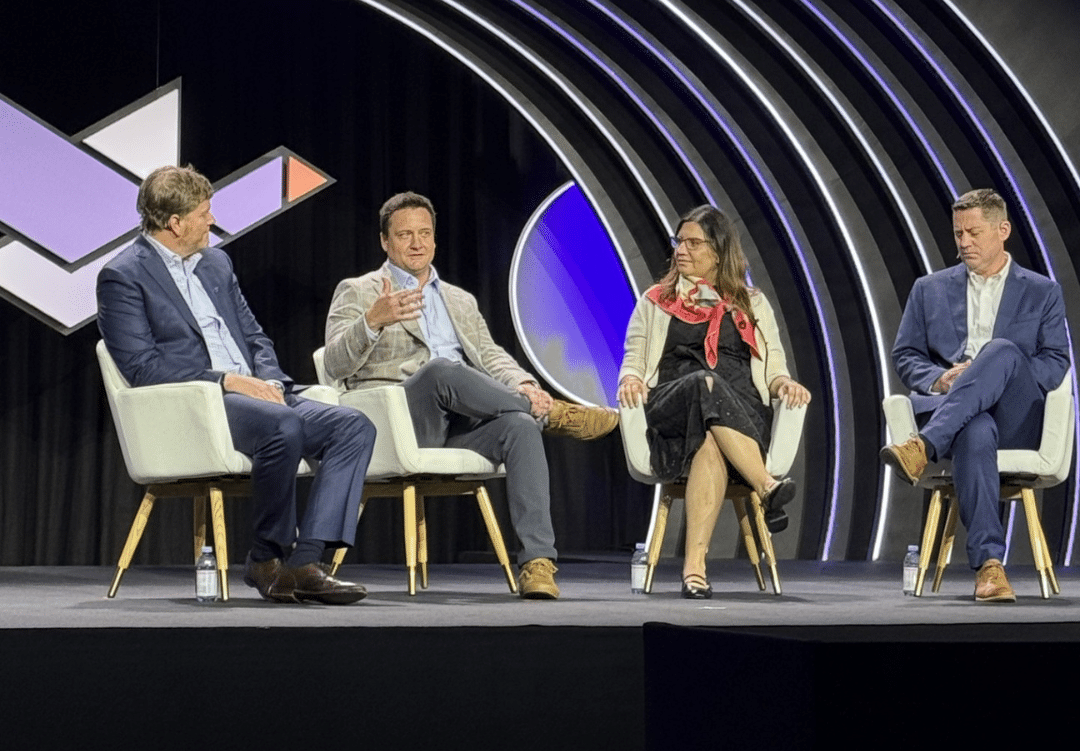
That was also the focus of Inside the Tech-Native Commercial & Specialty Insurer, where Andy Moss, General Manager-Underwriting, Duck Creek, Marissa Buckley, Founder, RevUp, and Charles Valinotti, Chief Program and Underwriting Officer, Spinnaker Insurance Company, explored how technology can shape an operating model around connected underwriting, data, and decision-making—not simply a collection of new tools.
Duck Creek + Send brings that model to life by connecting underwriting workflows, data, AI, and the Intelligent Core in one underwriting experience. It coordinates the work from submission intake and triage through enrichment, assessment, pricing, approvals, quote, bind, and post-bind activity—so underwriting intelligence can become action within the core, not remain separate from it.
5. How can insurers use AI without losing control of the decisions that matter?
As AI moves from assisting with information to participating in insurance workflows, the standard for trust becomes higher. Responsible AI requires insurers to have confidence in what an AI system recommends or does—and in their ability to reconstruct and explain how it arrived there.
That concern was reflected in PropertyCasualty360’s ITC Vegas roundup, where Duck Creek CEO Hardeep Gulati noted that the stakes change when AI moves into policy servicing, underwriting, and claims. The question is no longer simply whether AI can generate an answer—but whether it can deliver a consistent, governed outcome in the workflows that determine insurance decisions.
Read PropertyCasualty360’s ITC Vegas coverage →
That means governance cannot be added after the fact. Insurers should be able to trace the information used, where it came from, the rules and decision authority applied, the model and version involved, any required human review, and the actions taken. This creates a defensible record of an AI-influenced decision—while keeping people accountable for the decisions that require their judgment.
Duck Creek’s Agentic AI Platform is built with that principle in mind. Its AI Assurance capabilities help insurers govern, trace, and explain how intelligence is used within insurance workflows, so AI can help move work forward with the transparency, control, and human oversight the business requires.
That commitment to responsible AI is reinforced by Send’s ISO 42001 certification, which demonstrates alignment with the international standard for AI management systems and addresses transparency, accountability, risk management, and continuous improvement across the AI lifecycle.
Explore the architecture of trusted AI in P&C insurance →
Continue the Conversation
The questions we heard in Las Vegas do not have one universal answer. Every insurer begins with a different mix of products, markets, data, systems, and operating priorities.
But the opportunity is shared: build an insurance operation where trusted data, governed AI, intelligent orchestration, human judgment, and core execution work together—so intelligence can contribute to the decisions and outcomes that matter.
That is the work Duck Creek is doing with insurers through the Intelligent Core. If these questions are on your agenda, we would welcome the opportunity to continue the conversation.
GARTNER LANGUAGE
Gartner does not endorse any company, vendor, product or service depicted in its publications, and does not advise technology users to select only those vendors with the highest ratings or other designation. Gartner publications consist of the opinions of Gartner’s business and technology insights organization and should not be construed as statements of fact. Gartner disclaims all warranties, expressed or implied, with respect to this publication, including any warranties of merchantability or fitness for a particular purpose.
Put AI in Insurance to Work
See how Duck Creek’s Agentic AI Platform brings together insurance-native intelligence, orchestration, governance, and human oversight to put AI to work across insurance operations.
Resources to Power Your Knowledge
Trusted resources selected for distribution and compliance leaders