Agentic AI for Insurance: What Insurers Should Expect from an Agentic AI Platform
Agentic AI is moving insurance beyond AI that analyzes, summarizes, or recommends. AI agents can now take on more complex work across insurance workflows—using context, applying intelligence, coordinating actions, and involving people when judgment or oversight is required.
But building agents is only the beginning. The real challenge is putting them to work safely and effectively across the enterprise. Insurers need a foundation that can connect AI agents with trusted insurance data, business rules, workflows, people, and core systems—and orchestrate how work moves from intelligence to action.
That is the role of an Agentic AI Platform. Within Duck Creek’s Intelligent Core, the Agentic AI Platform provides the intelligence and orchestration layer that helps insurers move from AI experimentation to governed execution across insurance operations.
What is Agentic AI in Insurance?
Agentic AI in insurance uses AI agents to interpret information, apply defined authority, and help move work through governed insurance workflows—while preserving traceability, controls, and human oversight.
Agentic AI creates an opportunity to move beyond AI that informs insurance work to AI that can participate in getting the work done. But doing that on an enterprise scale requires more than individual agents or models. The right platform can make agentic AI usable, governable, and scalable across the business.
What Are Practical Examples of Agentic AI in Insurance?
Rather than simply summarizing information or generating a recommendation, agentic AI can help complete multi-step insurance work.
In practice, that can mean turning a submission into decision-ready risk information, capturing and routing a first notice of loss, preparing context for a policy change, or helping translate approved product requirements into configuration. In each case, agents gather information, apply insurance context, invoke tools and systems, coordinate actions, and bring people into the process when judgment is required.
The shift is from AI that provides an answer to AI that can help move insurance work forward.
Go deeper: What Agentic AI means for P&C insurance
Why Insurers Need a Platform, Not Just More Agents
Insurers are moving quickly from AI experimentation toward production use cases. As that happens, the challenge changes.
Building an individual agent is relatively easy. Making agents work together across an enterprise—within the insurer’s data, rules, systems, and controls—is much harder.
An Agentic AI Platform provides the shared framework for doing that consistently. It gives insurers a common way to orchestrate agents, connect them to the business, apply governance, and expand into new use cases without rebuilding each time.
The opportunity isn’t to deploy more agents. It’s to create an operating model for intelligence at scale.
Go deeper: Why insurers are moving from AI experimentation to insurance-native Agentic AI
Insurance Intelligence Requires Insurance Context
General-purpose AI can reason across information, but insurance work depends on specialized context: risk, coverage, products, pricing, policy history, claims information, business rules, regulatory requirements, and the relationships between them.
An insurance-specific Agentic AI Platform should ground agents in that context so their work reflects the products, rules, risks, and decisions of the insurance business.
The differentiator isn’t simply whether a platform has AI agents. It’s whether those agents can do meaningful insurance work.
Where Can Agents Create Value in Underwriting, Claims, and Policy Operations?
Agents create the most value where work is information-intensive, repeatable, and spread across people, systems, and handoffs. The role of the agent should reflect the risk of the task: preparing and routing work where automation is appropriate, and escalating decisions that require insurance expertise or approval.
- In underwriting, Agentic AI can orchestrate submission intake, triage, enrichment, and risk analysis to turn incoming submissions into decision-ready information. Duck Creek + Send connects that intelligence with underwriting workflow and core execution—from submission intake and triage through pricing, quote, bind, and post-bind servicing.
- In policy operations, agents can help prepare information for policy changes, renewals, and servicing requests; apply carrier-defined rules; and route exceptions to the appropriate person for review or approval.
- In product development, Agentic Product Configurator can help teams move from product documentation through requirements, configuration, and validation—creating a governed path from business intent toward deployment-ready configuration.
- In claims, Agentic First Notice of Loss helps capture, validate, enrich, triage, and route loss information across digital, voice-to-text, and mobile channels. It connects policy context, risk signals, carrier-defined workflows, and human checkpoints from the first interaction.
These are not isolated AI tasks. They show how specialized agents, insurance context, systems, and people can be orchestrated around an insurance outcome.
Different workflows require different intelligence, but the objective is the same: reduce the work between information, decision, and action.
Go deeper: Why underwriting transformation requires orchestration and a connected operating model
How Do Insurers Move from AI Pilots to Production Use?
A successful pilot proves that AI can perform a task. Production requires proving that AI can perform work reliably, transparently, and within the controls of the insurance operation.
Moving into production requires trusted insurance context, defined decision authority, traceable actions, clear escalation paths, and human oversight at the points where judgment is required.
Orchestration coordinates that work across agents, systems, and people.
That’s what separates an AI pilot from an operating capability: intelligence becomes part of the governed workflow of the business.
Go deeper: Built for Change: How Operations Make AI Work in Insurance
Connect Intelligence Through the Intelligent Core
AI shouldn’t stop at the edge of the core. The decisions and actions it supports need to connect with the systems responsible for executing insurance work.
Within Duck Creek’s Intelligent Core, trusted insurance context, intelligence, orchestration, people, and core execution work together. An underwriting insight can move into Rating and Policy. A policy decision can flow into Billing and Payments. Claims intelligence can trigger the next appropriate action while maintaining the context and governance behind the decision.
Duck Creek’s Agentic AI Platform provides the intelligence and orchestration layer within that foundation—helping insurers coordinate intelligent work across the insurance lifecycle while the Intelligent Core connects it to trusted context and core execution.
Go deeper: Why P&C insurance is moving from digital transformation to intelligent operations
What Capabilities Matter in an Agentic AI Platform?
Moving Agentic AI into production requires more than models and agents. Insurers need the capabilities to orchestrate work, ground AI in insurance context, maintain human control, and govern how agents operate at enterprise scale.
Orchestrate Agents, Systems, and People
Insurance work rarely happens within a single application or agent. A task may require information from multiple sources, actions across different systems, business rules, AI agents, and human judgment before it can be completed.
An Agentic AI Platform should coordinate those elements as part of a single workflow—determining what needs to happen next, invoking the appropriate agent or system, carrying context forward, and escalating work to people when judgment or approval is required.
Orchestration is what turns individual AI capabilities into coordinated insurance work.
Go deeper: See multi-agent orchestration in action with Duck Creek and Microsoft
Ground AI in Trusted Insurance Context
Agents need more than access to data. They need trusted, governed insurance data—and the context required to understand what that data means for the work being performed.
A modern platform should ground agents in carrier data, business rules, policy and claims information, product definitions, underwriting context, and other trusted sources needed for the task. That data needs to be accurate, connected, governed, and available in a form intelligence can use.
This is where a strong data platform becomes essential. By connecting data across insurance operations, insurers can give agents the trusted context they need to reason, make recommendations, and take appropriate action.
The quality of an agent’s action depends on the quality, context, and governance of the data behind its decision.
Go deeper: Why data readiness is the foundation of AI in insurance
Put Agentic AI to Work Across a Connected Insurance Environment
Insurers shouldn’t have to build a separate technology environment to put Agentic AI into production.
Within Duck Creek, the Agentic AI Platform works across a connected insurance infrastructure. Core insurance applications and Beyond Core capabilities work together through the Intelligent Core, sharing trusted insurance context and connected workflows across the business. That gives agents a single place for working across insurance operations rather than within isolated applications.
That system also needs to remain open. Duck Creek Anywhere Integration extends the core to external data, models, applications, and third-party services through APIs and prebuilt integrations.
And because intelligent operations need an enterprise platform underneath them, Duck Creek Cloud provides the cloud delivery model for operating and continuously evolving those capabilities.
The goal isn’t to build another AI layer beside the insurance business. It’s to put intelligence to work across a connected core that can also extend to the ecosystem around it.
Keep People in Control of Critical Decisions
Agentic AI can take on more work without removing people from the decisions where expertise, judgment, or accountability matters.
A modern platform should support human review, approval, escalation, and intervention at the appropriate points in a workflow. Decision authority should be clear, and insurers should be able to determine where an agent can act autonomously and where a person needs to remain involved.
Human oversight isn’t a limitation on Agentic AI. It’s part of what makes it usable for consequential insurance work.
Make Agent Decisions Visible and Traceable
As agents take more actions across insurance workflows, insurers need to understand what happened and why.
An Agentic AI Platform should provide visibility into agent activity and preserve a traceable record of decisions, actions, inputs, and human interventions. That creates a foundation for monitoring, auditability, governance, and review.
Insurers should be able to understand what an agent did, why it did it, and where human intervention occurred.
Build for Expansion Beyond the First Use Case
An Agentic AI strategy shouldn’t require insurers to rebuild the underlying foundation every time they identify a new opportunity.
A modern platform should make its core capabilities reusable across agents, workflows, and use cases. That allows insurers to start with focused opportunities and expand as their operating model, AI strategy, and business needs evolve.
Enterprise readiness isn’t about how many agents a platform can deploy. It’s whether insurers can expand Agentic AI without rebuilding the operating model around every new use case.
What Governance, Decision Authority, and Human Oversight Are Required?
As AI agents take on more work, responsible AI governance needs to extend beyond the model itself. Insurers need clear controls over what agents can do, what information they can use, how their actions are monitored, and where people remain accountable.
The goal isn’t unrestricted autonomy. It’s governed autonomy appropriate to the insurance work being performed.
Govern Agents Across Insurance Workflows
AI governance needs to operate where agents actually do work.
Insurers should be able to define the boundaries within which agents operate, monitor their behavior and outcomes over time, and apply controls based on the workflow, action, and level of risk involved.
Those controls may differ by use case. An agent gathering information or preparing a file may operate differently from one involved in a consequential underwriting, claims, or policy decision.
Governance should reflect what an agent is being asked to do—not simply the technology behind it.
Go deeper: How responsible AI governance keeps insurers in control
Keep Accountability with People
Human oversight is only one part of responsible Agentic AI. Insurers also need clear accountability for how AI is used across the business.
That means defining who owns the workflow, who has decision authority, when human review or approval is required, and how exceptions are handled. People should be able to intervene when judgment, expertise, or accountability requires it.
Agents can perform work. People remain accountable for how that work is governed and where decision authority resides.
Go deeper: Why human oversight matters in consequential AI-driven insurance decisions
Make Decisions Traceable and Support Compliance
As agents participate in insurance workflows, insurers need a reliable record of how intelligent work was performed.
That includes visibility into the information used, decisions and actions taken, and points of human intervention. Traceability supports auditability, internal governance, review, and an insurer’s broader regulatory and compliance responsibilities.
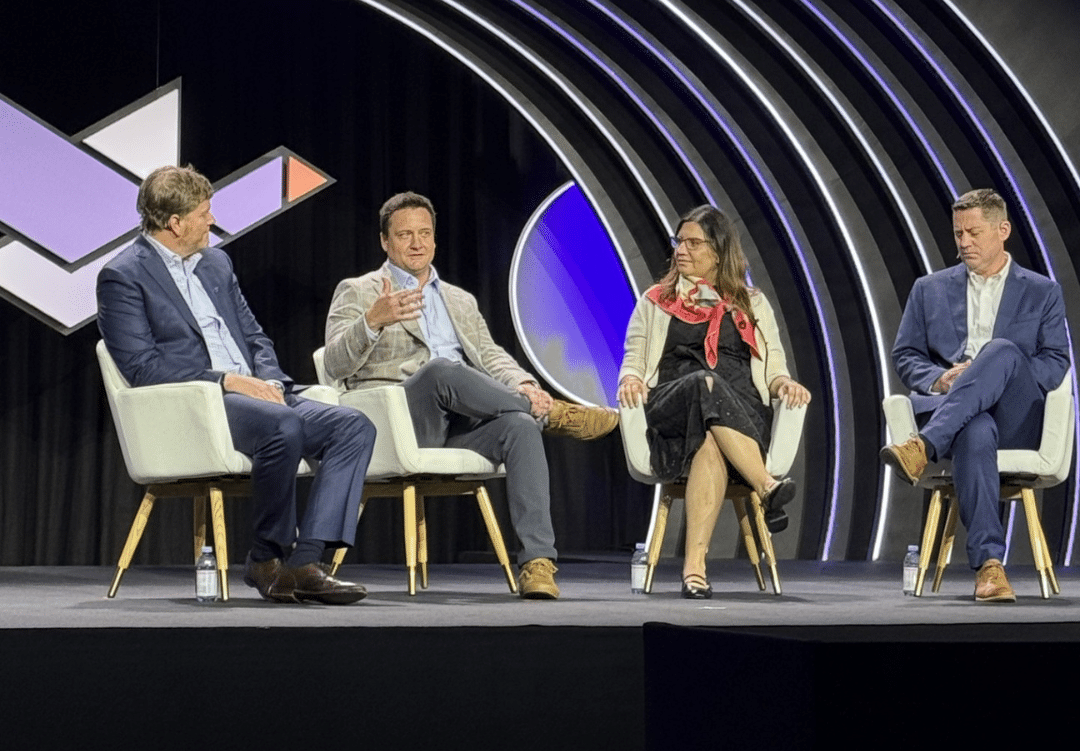
In this Creekside conversation about the architecture of trusted AI in P&C insurance, Duck Creek CTO Rajesh Raheja discusses what insurers need to be able to reconstruct—including the data used, model and version, rules tested, authority applied, and actions taken.
Responsible AI requires more than knowing the outcome. Insurers need to understand how that outcome was reached.
Protect Sensitive Insurance Data
Agentic AI may interact with sensitive policyholder, claimant, producer, financial, and business information. Protecting that data needs to remain fundamental as intelligence becomes more deeply embedded in insurance operations.
An enterprise Agentic AI Platform should operate within appropriate security, privacy, access, and data-governance controls so insurers can manage who and what can access sensitive information and how that information can be used across agents and workflows.
Greater intelligence shouldn’t require insurers to give up control of their data.
What Business Value Should an Agentic AI Platform Deliver?
The business case for Agentic AI should extend beyond automating individual tasks. Insurers should look for measurable improvements in decision speed, operating capacity, workflow efficiency, and the ability to scale intelligence across the business.
The value comes from improving how insurance work gets done—not simply from deploying more AI.
Reduce the Work Between Information and Decision
Insurance professionals spend significant time gathering information, validating data, preparing files, and navigating systems before a decision can be made.
Agentic AI can take on more of that preparation. In underwriting, that can mean turning submissions into decision-ready risk information. In claims, it can mean capturing, validating, and enriching loss information before it reaches an adjuster.
That gives insurance professionals more time to focus on judgment and complex work.
Move from Decision to Action Faster
A faster recommendation creates limited value if the work required to act on it remains manual or disconnected.
An Agentic AI Platform can orchestrate what happens next—coordinating agents, systems, and people so decisions move more efficiently into execution.
The opportunity is to shorten the distance between information, decision, and action.
Increase Operational Capacity
Operational efficiency isn’t only about reducing manual tasks. It’s about increasing what teams can accomplish with the resources they have.
By automating repetitive work, coordinating workflows, and routing exceptions to the right people, Agentic AI can give teams more capacity for complex decisions, customer needs, and higher-value work.
The business outcome is greater capacity—not automation for automation’s sake.
Scale Value Beyond the First Use Case
Individual AI pilots can demonstrate potential, but each new use case shouldn’t require insurers to start again.
A shared Agentic AI Platform allows insurers to reuse the same enterprise operating model as they expand into new workflows. That can shorten the path from identifying an opportunity to putting a governed use case into production.
Time to value improves when insurers can build on what already exists instead of rebuilding for every AI initiative.
Go deeper: 4 Principles for Lasting AI Transformation in Insurance
Support Profitable Growth Through Intelligent Operations
Agentic AI doesn’t create profitable growth on its own. It can help remove operational constraints that make growth harder.
Faster decisions, greater capacity, and more connected execution can help insurers respond to opportunity and handle more work without adding complexity at the same pace.
That creates greater ability to adapt and pursue growth while maintaining governance and human accountability.
Measure Value in Business Outcomes
The value of an Agentic AI Platform shouldn’t be measured by the number of agents deployed.
Insurers should define success around the outcomes each use case is intended to improve. Depending on the workflow, measures might include decision time, manual effort, throughput, exception rates, cycle time, and user experience.
The right question isn’t “How much AI are we using?” It’s “What insurance outcome are we improving?”
Ready to Move Agentic AI from Experimentation to Operation?
See how Duck Creek’s Agentic AI Platform brings together insurance-native intelligence, orchestration, governance, and human oversight to put AI to work across insurance operations.
Resources to Power Your Knowledge
Trusted resources selected for distribution and compliance leaders